Field guide

A Compass for Institutional Progress.

Starting points for work that compounds.

Where to begin

A credible place to begin.

Every public-serving institution eventually meets a challenge that calls for expertise beyond its existing capacity — in audience understanding, strategy, governance, financial resilience, capital planning, design, technology, organizational health, risk, or another consequential area of work. The difficulty, at that moment, is rarely a shortage of possible providers. It is the absence of a thoughtful way to identify the kind of help required, and where informed exploration might reasonably begin.

The Compass begins there. It is organized around institutional questions rather than provider promotion, because the first consequential question is usually not Who should we hire? It is What must we understand, decide, or become capable of doing? Each of the twenty-eight categories that follow opens with that kind of question, then points to practitioners and field resources whose work may offer a serious place to start.

Why we publish it

Insight, returned to the field.

Momentum's work produces an understanding of where credible help lives; the Compass returns that understanding to the field, free.

Basis of inclusion

How names arrive here.

The organizations and practitioners gathered here have come to Momentum's attention through different forms of credible experience. In some instances, Momentum or its principals may have directly supported, funded, commissioned, participated in, or closely observed the work. In others, inclusion reflects publicly documented expertise, meaningful contribution to the field, or a sustained record of applying specialist knowledge to institutions serving social, cultural, educational, scientific, environmental, or other public purposes.

The grounds for inclusion differ. The standard does not: each entry identifies a credible reference point whose methods, experience, or body of work may help an organization understand its options, sharpen its questions, and undertake better-informed diligence.

What this is — and is not

A compass, not a directory.

This is a selective field guide. It is not a ranking, a referral network, a preferred-provider directory, a commercial partnership program, or a blanket endorsement. Inclusion is not a certification, warranty, or guarantee of suitability, availability, performance, or results. It does not assert or imply that a named organization is a client, grantee, funder, advisor, or formal partner of Momentum — nor that every organization listed has worked with Momentum directly.

Momentum does not participate in an institution's selection process or in the commercial terms of any engagement because a name appears here. The list is intentionally non-exhaustive and subject to revision, and a capable provider can still be the wrong provider for a particular institution, community, scale, moment, or question.

One word, defined

"Trusted," meant precisely.

On this page, trusted means worthy of serious consideration as a starting point — not exempt from scrutiny. Before engaging any organization named here, an institution should independently assess the proposed team, relevant references, capacity, ownership, independence, conflicts, fees, accessibility, data practices, legal and reputational standing, and fit with its own community and circumstances.

The Fund's vocabulary is small and deliberate. This word is no exception. See the Fund's definitions.

Orientation

Five territories, twenty-eight starting points.

The Compass is arranged as institutions tend to move:

Twenty-eight questions. Begin with yours.

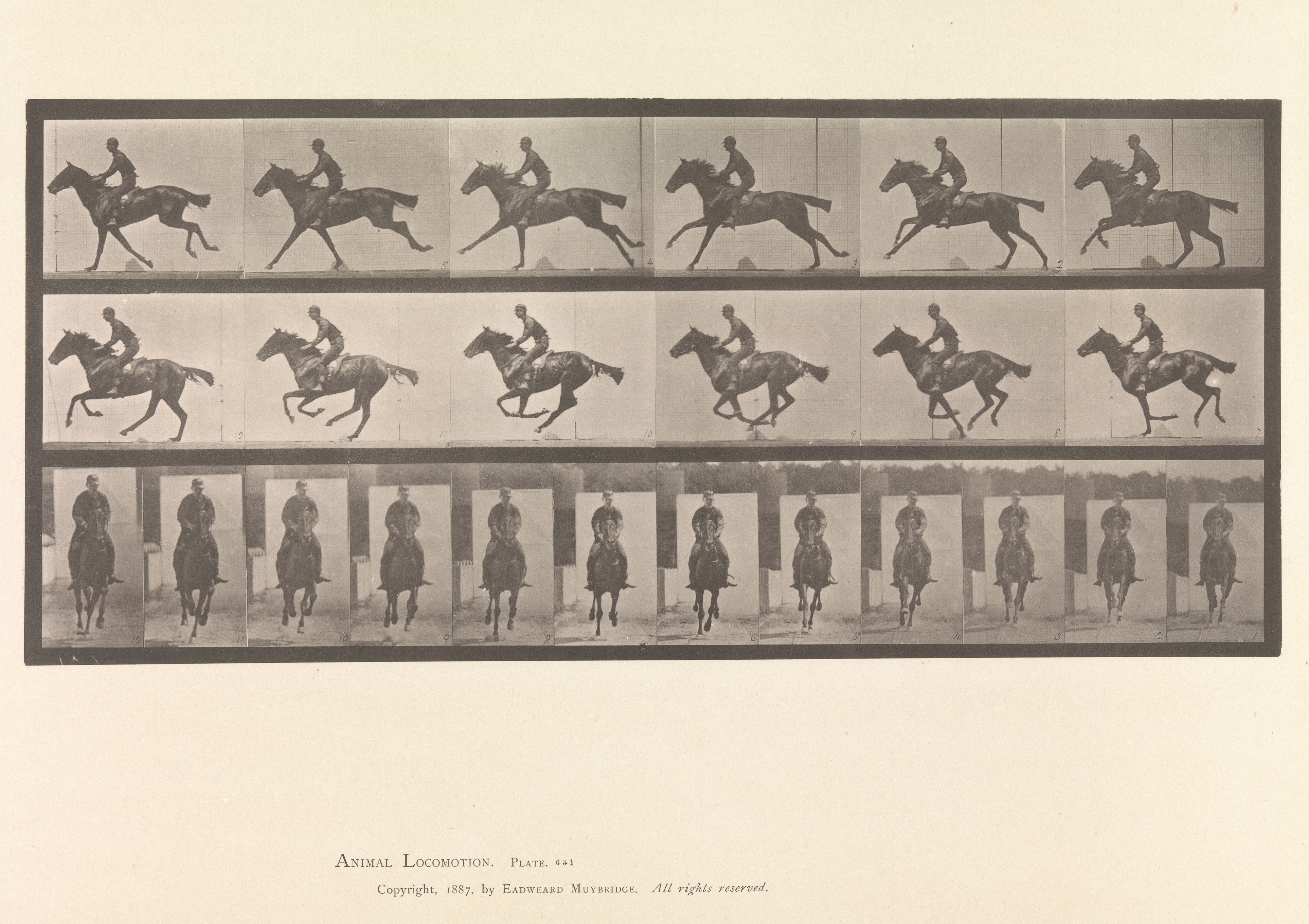
Muybridge locomotion study: motion measured frame by frame

Evidence — the audience, as it is

Understand before acting.

Comprehension precedes motion. Before an institution decides, builds, or spends, it needs to see clearly — its publics as they are, its choices as they actually compete, and the evidence that would change its mind.

01

Audience intelligence and public understanding

What do current and potential audiences value, what impedes participation, and what does credible evidence actually support?

IMPACTS Experience — IMPACTS applies audience research and strategic analysis to visitor-serving cultural organizations. Its ongoing national audience study and institution-level monitoring can help leaders examine attendance, membership, pricing, reputation, and engagement with evidence rather than assumption; the work is most useful when leadership begins with a precise decision it needs the evidence to inform.

Field resource: Culture Track — An initiative of LaPlaca Cohen, Culture Track makes research on cultural participation, access, belonging, and audience behavior available to the field. Its reports can help a team frame better questions and compare perspectives, but broad studies should be treated as a lens — not a substitute for current, local evidence.

Start wellDefine the decision first. "We need research" is not yet a research question.

02

Institutional strategy and operating model

What should the institution choose to do, stop doing, and organize itself to sustain?

AEA Consulting — AEA works across the cultural and creative sectors on strategy, planning, feasibility, research, operating models, and capital-project questions. It is particularly relevant when mission, audience, economics, governance, and physical ambition need to be considered together rather than in separate plans.

The Bridgespan Group — Bridgespan advises nonprofits, NGOs, and philanthropy on strategy, operating models, organizational effectiveness, leadership, and financial sustainability. It is a useful reference for institutions facing portfolio choices, growth, restructuring, collaboration, or systems-level work that extends beyond a single program or venue.

Start wellRequire a strategy to make choices. A document that preserves every priority is not a strategy.

03

Evaluation, learning, and impact

What changed, for whom, and what evidence would be strong enough to alter a decision?

ORS Impact — ORS works with nonprofits, foundations, and public agencies on planning, measurement, evaluation, and organizational learning. Its practice is especially relevant where change is complex, progress is not captured by a single metric, or evaluation needs to improve decisions rather than merely satisfy reporting.

WolfBrown — WolfBrown brings cultural-sector depth to audience research, program evaluation, and the study of how artistic and cultural experiences affect people. It is a useful reference when an institution needs to understand the quality and consequences of participation — not only attendance volume or earned revenue.

Start wellAgree in advance what the institution will do differently if the evidence points in an unexpected direction.

Grand staircase of the Walker Art Building

Groundwork — purpose, before form

Build with consequence.

Capital decisions outlive the people who make them. These disciplines test purpose before form — then carry it into money, buildings, places, and experiences meant to endure.

04

Financial resilience and mission-aligned capitalization

What mix of revenue, liquidity, reserves, debt, and investment will allow the mission to endure?

Nonprofit Finance Fund — Nonprofit Finance Fund is a nonprofit community development financial institution that combines financing with financial guidance for mission-driven organizations. It is especially relevant when the real question is working capital, facility financing, full cost, liquidity, debt, or capitalization — not simply how to balance one annual budget.

Start wellDistinguish a temporary cash-flow gap, a structural operating deficit, and an investable growth need. They require different responses.

05

Capital-project readiness, feasibility, and cultural planning

Should the project exist, at what scale, for which users, and with what operating consequences?

Lord Cultural Resources — Lord works with museums, science centers, gardens, libraries, archives, and other cultural institutions on master planning, feasibility, institutional and business planning, facility programming, and visitor experience. It is most relevant before architectural form has hardened, when an institution still has the freedom to test purpose, demand, program, scale, and long-term operating burden.

Theatre Projects — Theatre Projects specializes in performance venues, integrating strategic planning, operations, audience experience, theatre design, technology, and acoustics. It is a useful reference for organizations contemplating a new or renewed performing-arts space whose operating model and production needs must shape the building from the outset.

Start wellCapital planning should precede architecture procurement. Ask every upstream advisor to disclose related downstream design, delivery, or fabrication interests.

06

Architecture and civic design

Once purpose, program, operating logic, and community obligations are clear, who can translate them into an enduring public place?

Studio Gang — Studio Gang's portfolio includes consequential cultural, educational, and civic work, often connecting architecture with public space, ecology, learning, and urban life. It is a useful reference for institutions seeking a building that participates in its community and landscape rather than behaving as a self-contained object.

Adjaye Associates — Adjaye Associates has designed major museums and civic institutions across several continents, including the Smithsonian National Museum of African American History and Culture, the Studio Museum in Harlem, and public projects concerned with history, identity, and collective memory. It is a relevant reference where an institution is considering architecture with strong symbolic, cultural, and representational ambition; as with every consequential commission, evaluation should focus on the proposed team, governance, capacity, references, and current institutional fit.

MASS — MASS is a nonprofit architecture and design organization whose work links the built environment to justice, health, dignity, and community agency. It is particularly relevant when process, local knowledge, material choices, and social outcomes are integral to the architectural brief.

Snøhetta — Snøhetta is a transdisciplinary design practice with extensive work in libraries, museums, performance spaces, landscapes, and public realm. Its practice is worth studying where architecture, landscape, interior experience, and civic invitation need to operate as one idea.

Start wellSelect for the institution's actual brief, not for a signature image. Confirm the proposed day-to-day team, not only the firm's portfolio.

07

Exhibition, interpretation, and visitor experience

What should people understand, feel, do, and carry with them — and how will the institution know?

Thinc Design — Thinc develops exhibitions and experiences for museums, aquariums, science centers, and other public-facing institutions, bringing interpretive planning, spatial storytelling, media, and visitor experience into one process. It is especially relevant when a complex subject must become legible, participatory, and emotionally coherent without being reduced to spectacle.

Local Projects — Local Projects designs interactive media and participatory experiences for museums, memorials, libraries, and cultural institutions. It is a useful reference where digital behavior, physical space, content, and visitor agency must be designed together rather than added as separate layers.

Start wellResolve the interpretive proposition and audience need before choosing media, hardware, or fabrication.

08

Sustainability, climate resilience, and building performance

How can mission, collections, people, and buildings remain resilient under climate and resource constraints?

Atelier Ten — Atelier Ten specializes in environmental design and building-services engineering, with substantial experience helping museums and cultural buildings reconcile collection conditions, human comfort, energy use, carbon, and resilience. Its work is most useful early, when passive design and systems choices can still shape the project rather than compensate for decisions already fixed.

Buro Happold — Buro Happold brings engineering, sustainability, building performance, and interdisciplinary advisory capacity to complex public and cultural projects. It is a useful reference where structure, systems, carbon, comfort, operations, and long-term adaptability need to be resolved as an integrated whole.

Start wellTreat climate resilience as continuity of service and stewardship, not as a certification exercise.

The planted entrance of Phipps Conservatory drawing visitors in

The invitation — chosen, or empty

Serve and engage.

An institution is chosen, or it is empty. These practices concern the invitation itself — whose knowledge shapes the work, who can participate with dignity, and how awareness becomes relationship.

09

Community engagement and participatory planning

Whose knowledge and authority must shape the work before decisions harden?

Civic Arts — Civic Arts works in cultural planning, creative placemaking, community research, engagement, and evaluation. It is a useful reference when cultural investment must be grounded in local priorities and connected to broader questions of place, public life, and community capacity.

Public Agenda — Public Agenda is a nonpartisan nonprofit that combines research, public engagement, and dialogue around consequential public questions. It is particularly relevant when an institution needs more than a listening session: a credible process through which different communities can understand tradeoffs, deliberate, and influence decisions.

Start wellBe explicit about what participants can influence. Engagement without decision rights can extract trust rather than build it.

10

Accessibility, universal design, and sensory inclusion

Can people with varied bodies, senses, cognition, languages, ages, and technologies participate with dignity and agency?

Institute for Human Centered Design — IHCD is a nonprofit design, consulting, and education organization focused on accessibility and universal or inclusive design across places, products, information, communication, and services. It is a strong reference when an institution wants to move beyond minimum compliance and consider the full experience of diverse users.

KultureCity — KultureCity helps venues build sensory-inclusive operating practices through staff training, tools, signage, and visitor information. Its work addresses an important and often overlooked layer of access, but sensory certification should complement — not substitute for — disability-led research, universal design, digital accessibility, and legal compliance.

Start wellInclude disabled people as paid experts and co-designers early enough to change the work.

11

Institutional narrative, brand, and cultural communications

Can the institution explain why it matters — plainly, truthfully, and in a voice its communities recognize?

Hyperakt — Hyperakt develops strategy, identity, digital expression, and storytelling for nonprofits, foundations, and other purpose-driven organizations. It is a useful reference when a brand must clarify an institution's public role and make complex work understandable without flattening its substance.

Resnicow and Associates — Resnicow specializes in communications for cultural organizations, including institutional positioning, media strategy, leadership transitions, public issues, and reputation. It is particularly relevant when organizational change or a consequential public moment requires disciplined stakeholder and media communication rather than promotion alone.

Start wellBrand cannot repair a gap between stated purpose and lived experience. Resolve the institutional truth before refining its expression.

The effective investment of marketing dollars is often the single greatest revenue lever an institution holds.

12

Audience acquisition and engagement

A chosen institution lives by voluntary engagement — and voluntary engagement is contested, every hour, by commercial enterprises that pursue attention with industrial discipline. In that contest, the effective and beneficial investment of marketing resources is often the single greatest revenue lever available to leadership: more immediate than pricing, more controllable than philanthropy, and compounding — into visitation, membership, enrollment, giving, and the evidence that makes every next dollar wiser. Few consequential budget lines receive less governance. This category exists to correct that asymmetry.

How should marketing resources be invested so that awareness becomes participation, and participation becomes revenue, relationship, and evidence — at a standard of proof leadership and the board can trust?

Singularis — Singularis is the audience-acquisition intelligence developed by IMPACTS Research & Development, the applied-research studio whose advisory practice, IMPACTS Experience, appears in Section 1. Its published architecture treats the unit of optimization as the individual decision state — a probabilistic, privacy-governed representation of propensity, motivation, timing, and economic value — rather than the segment or the campaign, and closes the loop from acquisition decision to verification to attribution, so that spend returns as evidence. It is most relevant when an institution wants paid acquisition governed by institution-specific evidence its leadership can examine; engagements are limited, and the practice states that fit is determined by problem rather than budget.

Publicis Groupe — Publicis Groupe is a global communications group whose connected operating model — described as the Power of One — spans creative agencies, media investment, first-party data capability, and digital business transformation. It represents the enterprise tier of the discipline: most relevant when an institution's scale, campaign complexity, or market moment warrants the integrated apparatus commercial enterprise brings to the contest for attention, engaged through specifically named agencies, teams, and terms rather than the group in the abstract.

WPP — WPP unites media investment and intelligence, creative and production capability, marketing technology, and strategic counsel at global scale, increasingly organized around its AI-enabled marketing platform. It is a comparable enterprise-tier reference, most relevant where global reach, media buying power, or integrated brand-to-media coordination materially serves the institution's ambition — and where leadership is prepared to govern a large-firm engagement with the rigor of any major capital commitment.

Start wellGovern marketing as invested capital, not consumed budget. Secure attribution the institution can audit, data the institution owns, and full transparency on how media is bought, marked up, and compensated — including any principal-based buying. Then hold every dollar to a single measure: not what was spent, but what the spending caused.

13

Digital products, websites, and interactive experiences

What should a digital experience enable people to understand or accomplish — and who is excluded by the current design?

Bluecadet — Bluecadet works across websites, digital products, interactive media, and physical-digital experiences, with extensive museum and cultural-institution work. It is a useful reference where audience research, content, accessibility, technology, and on-site experience need to form a coherent digital ecosystem.

Forum One — Forum One develops digital strategy, design, data, content, and technology for nonprofits, foundations, cultural institutions, associations, and public agencies. It is particularly relevant for complex service or information environments that require accessible experience design, durable platforms, and organizational content governance.

Start wellBegin with users, services, content, and internal ownership — not a content-management system or a feature list.

14

Constituent data, ticketing, membership, and CRM

Can the institution see and serve a whole relationship across visits, giving, membership, learning, and communication?

Tessitura — Tessitura is a nonprofit, member-owned technology organization whose unified platform supports ticketing, admissions, fundraising, membership, marketing, education, and constituent relationships for arts and cultural organizations. It is particularly relevant where earned and contributed relationships cross multiple programs or venues, but institutions should test migration readiness, total cost, data quality, governance, integrations, and internal product ownership before committing.

Start wellA new platform will not resolve unclear processes or unreliable data. Clean the operating model before — or as part of — migration.

A Shaker workshop, its benches and tools kept in working order

Continuity — solvent, safe, still serving

Sustain the institution.

Endurance is built, not inherited. Money, people, leadership, memory, systems, and law — the quiet structures that keep a mission solvent, safe, and able to keep its promises.

15

Fundraising and philanthropic strategy

Is the institution ready to invite investment — and is its case grounded in strategy, capacity, and public value?

Marts & Lundy — Marts & Lundy advises mission-driven organizations on philanthropic strategy, campaigns, analytics, prospect management, communications, and development capacity. It is a useful reference when an institution needs to connect long-range aspiration with a realistic constituency, case, pipeline, and fundraising organization.

CCS Fundraising — CCS provides campaign planning, feasibility work, campaign management, development assessments, analytics, and interim support across a wide range of nonprofit sectors. It is particularly relevant for large or operationally demanding campaigns that require sustained implementation capacity as well as front-end planning.

Start wellCounsel cannot manufacture readiness. Leadership alignment, a credible case, donor confidence, and the ability to deliver the promised public value must come first.

16

People, management, and organizational health

Do managers have the clarity, habits, and support to turn institutional purpose into sustainable work?

Field resource and practitioner: The Management Center — The Management Center is a nonprofit that provides coaching, training, and practical tools to social-justice and educational-equity organizations. It is a useful starting point for leaders seeking management practices that connect results with equity and sustainability, especially where burnout, unclear delegation, feedback, or accountability has become an institutional constraint.

Start wellDo not treat chronic overload as an individual resilience problem. Examine priorities, roles, spans of control, decision rights, and the work the organization has not chosen to stop.

17

Executive search and board governance

What leadership — and what board practice — does the institution's next chapter actually require?

Isaacson, Miller — Isaacson, Miller focuses on leadership recruitment for civic and mission-driven institutions, with practices spanning arts and culture, education, philanthropy, science, environment, and human services. It is a useful reference for consequential searches where public purpose, stakeholder complexity, and institutional context should shape the mandate and candidate field.

Field resource: BoardSource — BoardSource provides nonprofit governance research, education, assessment, tools, and a network of affiliated consultants. It is especially useful before or alongside a leadership transition, when the board needs to clarify its own role, culture, composition, decision practices, and partnership with the chief executive.

Start wellWrite the future mandate before writing the position description. A search cannot compensate for unresolved board expectations.

18

Collections care, preservation, and emergency planning

What must be preserved, what risks are material, and what stewardship can the institution sustain?

Conservation Center for Art & Historic Artifacts — CCAHA is a nonprofit conservation center offering treatment, surveys, preservation planning, emergency preparedness, digitization, education, and collections-care support. It is a strong starting point for museums, libraries, archives, historic sites, and smaller collecting organizations that need a practical path from risk assessment to action.

Image Permanence Institute — Housed at Rochester Institute of Technology, IPI combines preservation research, consulting, testing, education, software, and practical tools for libraries, archives, and museums. It is particularly relevant to photographic, film, digital-print, and environmental-management questions where scientifically grounded monitoring can improve preservation while avoiding unnecessary energy and operating cost.

Start wellPrioritize by significance, vulnerability, use, and consequence. A plan that treats every object and every risk as equal cannot guide action.

19

Nonprofit technology, cybersecurity, privacy, and continuity

Could the institution continue serving people after a breach, outage, vendor failure, or loss of institutional knowledge?

Community IT Innovators — Community IT provides managed IT, planning, cloud, data protection, continuity, and cybersecurity services exclusively to nonprofits. It is a useful reference for organizations that need technology decisions explained in mission and risk terms rather than treated as a sequence of isolated technical purchases.

Field resource: NTEN — NTEN is a nonprofit community and education organization focused on the equitable, effective use of technology in mission-driven work. Its assessments, courses, cybersecurity and AI resources, and peer community can help an institution build internal judgment before procurement or strengthen capacity when a full consulting engagement is not the right first step.

Start wellPut identity protection, backups, incident response, vendor access, data retention, privacy, and staff training on the governance agenda — not only the IT agenda.

20

Nonprofit law, tax, fundraising regulation, governance, and consequential advisory

Does governance, revenue, fundraising, grantmaking, advocacy, structure, or a high-consequence institutional problem create obligations and risks that ordinary general-business advice may not see?

Perlman & Perlman — Perlman & Perlman focuses on the philanthropic sector, including nonprofit governance, tax-exempt law, charitable fundraising regulation, compliance, social enterprise, and organizational transactions. It is a useful reference when public-benefit activity crosses state fundraising rules, cause-related marketing, earned revenue, affiliations, or structural change.

Adler & Colvin — Adler & Colvin works exclusively with nonprofits, philanthropy, tax-exempt organizations, and donors. Its practice spans formation, public charities, private foundations, grantmaking and social investment, governance, mergers, international work, revenue-generating activity, and the tax treatment of lobbying and political activity.

KLF Advisory — KLF Advisory is Khayat Law Firm's multidisciplinary strategic-advisory practice for singular, sensitive, or high-consequence matters whose legal, governance, financial, operational, communications, technology, and reputational dimensions cannot responsibly be separated. It is a useful reference when an institution needs a coordinated response to an unfamiliar problem rather than a conventional legal or consulting scope.

Start wellMatch expertise to the jurisdiction and precise question, confirm conflicts, and seek advice before commitments are made. At the outset, distinguish legal representation and privileged work from broader strategic advisory, and define authority, confidentiality, decision rights, and work product accordingly. This field guide is not legal advice.

The Liberty Bridge suspended above a river gorge, held by its cables

Connective tissue — what holds while everything moves

Cross-cutting capacities.

Some needs do not belong to a single phase of institutional work. They protect the connective tissue: the owner's interests, the reliability of financial information, the stewardship of long-term capital, the integrity of organizational transitions, the quality of services, and the safety of people and assets.

21

Owner's representation, project governance, and construction delivery

Who will protect the institution's interests when contracts, consultants, decisions, risks, and changes converge in one complex capital project?

Becker & Frondorf — Becker & Frondorf provides owner's representation and cost estimating, with particular experience in museums, cultural institutions, and other nonprofits. It is a useful reference when an institution needs an experienced extension of staff to coordinate team selection, procurement, contracts, budget, schedule, change control, construction, and the transition into operations.

Start wellEstablish independent owner-side accountability before design and construction commitments multiply. Define the representative's authority, reporting line, budget baseline, contingency rules, change-approval process, and responsibility for operational handoff.

22

Nonprofit finance operations, accounting, and audit readiness

Are the books, controls, grant records, reporting, and financial cadence reliable enough for staff, leadership, and the board to act?

YPTC — YPTC provides outsourced bookkeeping, month-end close, reporting, internal controls, audit preparation, and controller- and CFO-level support for nonprofits. It is a useful reference when an institution needs a stable finance function during growth or transition, or when a full in-house team is not yet feasible.

CLA — CLA has a dedicated nonprofit practice spanning audit, tax, outsourced finance, operations, and advisory work, including specialized experience with arts and cultural organizations. It is a useful reference when independent assurance, complex reporting or tax requirements, a Single Audit, or a broader assessment of the finance function is required.

Start wellOutsource execution, not accountability. Preserve segregation of duties and auditor independence, limit provider access, document approvals and continuity, and ensure the board can understand — not merely receive — the financial information.

23

Endowment governance and institutional investment stewardship

What is long-term capital for, how much can be spent, what risks can be accepted, and who is accountable for each decision?

Commonfund — Commonfund combines institutional asset management and outsourced chief investment officer services with research and education on nonprofit investment governance. It is a useful reference for endowments, foundations, cultural organizations, and other long-horizon institutions seeking to connect investment practice with mission, spending needs, and board responsibility.

TIFF Investment Management — TIFF provides outsourced chief investment officer and alternative-investment strategies to educational institutions, foundations, cultural and historical institutions, healthcare organizations, and other public-benefit entities. It is a useful comparison when a board is considering delegated investment management and wants nonprofit-informed governance support alongside portfolio implementation.

Start wellThe board should define purpose, time horizon, spending policy, liquidity, risk, mission or values constraints, and decision rights before selecting a manager. Compare fiduciary role, fees, custody, conflicts, reporting, benchmarks, and termination terms. This field guide is not investment advice.

24

Strategic alliances, mergers, and organizational transitions

Would mission be strengthened through collaboration, shared services, fiscal sponsorship, a joint venture, merger, acquisition, spin-off, or an orderly transition?

La Piana Consulting — La Piana advises nonprofits on collaborations, alliances, strategic restructuring, mergers, acquisitions, and post-combination integration. It is a useful reference when leaders need to compare structural options, reach a decision without treating merger as the presumed answer, and carry the chosen path through governance, culture, and implementation.

Field resource and funder: SeaChange Capital Partners — SeaChange provides grants, loans, analysis, and advice to help nonprofits explore or implement mergers, joint ventures, programmatic alliances, and other durable collaborations. It is not ordinarily a work-for-hire consultant; support is selective, most advisory work is pro bono, and lending is focused on nonprofits working in New York City.

Start wellDefine the mission case, alternatives, non-negotiables, stakeholder authority, liabilities, and exit conditions before negotiating structure. Budget for legal, financial, cultural, data, people, and systems integration — not only the transaction.

25

Service design and program innovation

How might a program, service, or system be redesigned around the lived reality of the people expected to use and deliver it?

Public Policy Lab — Public Policy Lab is a nonprofit design organization that works with government, institutions, foundations, public servants, and residents to improve policy and public services. It is a useful reference when an institution needs to see a service as a whole system — across policy, operations, frontline delivery, and public experience — rather than repair one isolated touchpoint.

Greater Good Studio — Greater Good Studio applies human-centered design to the work of nonprofits, foundations, and public-serving systems. It is particularly relevant when a team needs disciplined research, co-design, prototyping, and learning to make a program more inclusive, usable, and responsive before committing to scale.

Start wellDesign with people, not merely for them. Pay community participants where appropriate, include frontline staff, test assumptions with prototypes, and budget for implementation and learning after the design phase.

26

Responsible data, analytics, and artificial intelligence

Where could data or AI improve a real public-benefit decision or service — and what rights, risks, or inequities might its use create?

DataKind — DataKind is a nonprofit that combines data-science and AI expertise with social-sector partnerships, capacity building, and reusable technical work. It is a useful reference when an organization has a defined public-benefit problem and needs to test whether data can address it responsibly — not when it is seeking technology for its own sake.

See also: NTEN in Section 19 for technology governance, staff capacity, cybersecurity, and peer learning.

Start wellBegin with public value, a real decision, data readiness, and the consequences of error. Resolve data rights, consent, representativeness, bias, privacy, security, explainability, human review, appeal, maintenance, and an exit plan before choosing a model or vendor.

27

Risk, insurance, and institutional resilience

Which risks should be prevented, reduced, transferred, accepted, or planned for — and could the institution still serve people after a serious loss?

Nonprofits Insurance Alliance — Nonprofits Insurance Alliance is a group of nonprofit insurers providing liability and property coverage designed for eligible 501(c)(3) organizations, together with risk-management tools, consulting, and training for policyholders. It is a useful reference for sector-specific coverage and prevention practices; availability, terms, exclusions, and services vary by jurisdiction and policy.

Huntington T. Block — Huntington T. Block, an Aon operating unit, specializes in insurance and risk support for museums, collections, exhibitions, galleries, universities, and music organizations. It is particularly relevant where fine art, artifacts, loans, transit, valuation, event cancellation, and collection-specific claims expertise sit alongside ordinary property and liability exposures.

Start wellInsurance transfers only defined risks; it does not replace prevention or continuity planning. Inventory people, programs, places, assets, collections, data, contracts, and dependencies, then test limits, exclusions, deductibles, valuation, carrier strength, claims support, and recovery scenarios with a licensed advisor. This field guide is not insurance advice.

28

Safeguarding, misconduct prevention, and duty of care

Are children, vulnerable adults, staff, volunteers, artists, and participants protected by systems that work before, during, and after harm?

Praesidium — Praesidium focuses on preventing abuse in organizations that care for or serve people, including youth programs, schools, healthcare and social-service organizations, religious institutions, and community programs. Its assessments, policy consultation, screening, training, response support, and accreditation provide a structured reference for strengthening safeguarding systems.

Soteria Solutions — Soteria Solutions is a nonprofit that translates violence- and harassment-prevention research into programs for workplaces, colleges, schools, public agencies, and other institutions. It is a useful reference when an organization needs evidence-informed prevention, bystander practice, leadership engagement, and implementation designed to change everyday conditions rather than satisfy a one-time training requirement.

Start wellSafeguarding is a governance and operating system, not a training event or certificate. Align screening, supervision, codes of conduct, reporting and mandatory-reporting duties, non-retaliation, survivor support, independent investigation, records, insurance, and crisis response with applicable law and with the knowledge of people most affected.

Using the compass

Travel well.

Before engaging any outside resource:

  1. Name the decision. State what leadership or the board must be able to decide when the work is done.
  2. Sequence the work. Research informs strategy; strategy informs program; program and operating logic inform capital and design.
  3. Protect independence. Ask about ownership, related companies, referral arrangements, downstream commercial interests, and conflicts.
  4. Verify the actual team. Evaluate the people who will do the work, their availability, and relevant references — not only the firm's best-known projects.
  5. Define evidence and outputs. Agree on methods, decision gates, deliverables, data rights, accessibility, confidentiality, and what happens if the evidence challenges the premise.
  6. Keep judgment inside. An advisor should improve a decision — not become the institution's unexamined decision-maker.
  7. Build capacity, not dependency. The work should leave staff and board better able to understand, operate, and improve the institution after the engagement ends.

The point is not to outsource judgment. It is to sharpen it.

Correspondence

A living document.

The Compass is selective, non-exhaustive, and revised as the field changes. Corrections and updates are welcome through the nomination form — with the understanding that inclusion follows the page's editorial standard, not request.

Offer a correction or nomination

Last reviewed:

The Compass points; the organization must still choose its path.